Your Best Customers Shouldn't Feel Lucky to Have Found You

A prospect once asked Teak how to build an abandoned-cart flow. Alex, one of the founders, asked whether the game had a cart that could be abandoned. It did not.
It sounds like a punchline. It was a diagnosis. Teak had spent more than twelve years building a retention platform for free-to-play games, shaped around daily sessions, live events, player economies, and rewards that carry real in-game value. And someone arriving cold reached for the one mental model that had nothing to do with any of it, because that was the model the category had handed him. The product wasn't the problem. The frame was, and the frame was making an unusually right product look like it was missing something.
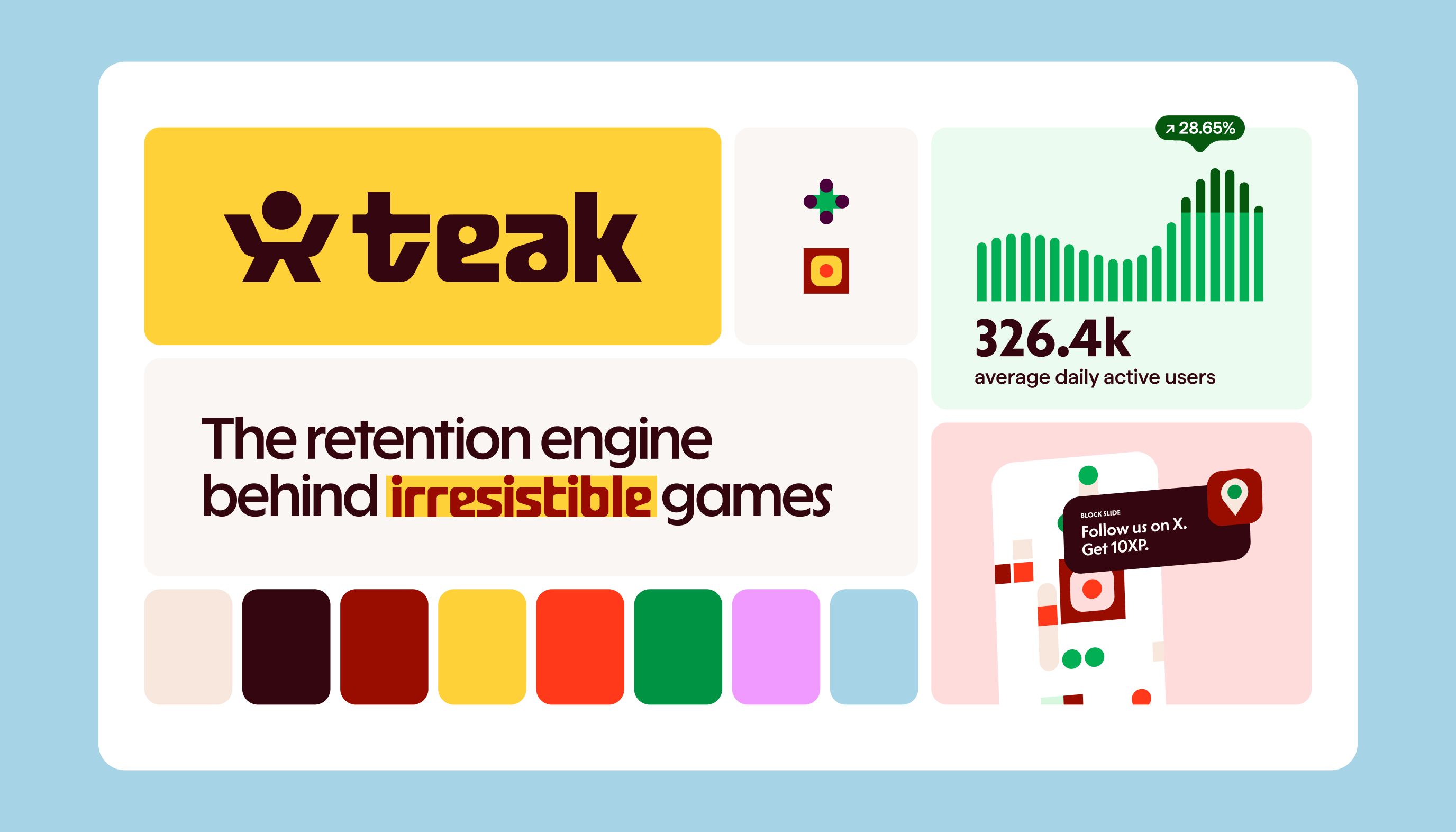
A specialist that read as an underpowered generalist
Teak was not hiding the gaming part. The site said games, rewards, push, email, social links, segmentation, analytics. The trouble was arithmetic. List your capabilities one by one and each one gets measured against the biggest, most familiar version of itself. Push gets weighed against the push platforms. Email against the email platforms. Segmentation against whatever enterprise CRM already has its hooks in the building. Describe a specialist in those terms and it turns into a worse generalist, every time.
That comparison was a fight Teak could only lose. Braze shows up early in the consideration set because it is polished and powerful and everyone has heard of it, and to be fair, it is all three. But gaming is one vertical among many for Braze. For Teak it is the entire job. The harder Teak worked to prove it could do everything a buyer might expect, the harder it got to see why it was the right call for this particular world.
The customers never had this confusion. They knew exactly how unusual the thing was. One of them described the old public experience as Windows 95, which is funny until you sit with it: behind that dated front door sat more than a decade of specialized product knowledge, and the door was telling people to expect a legacy utility. Another reaction stuck with me more. When Alex explained that Teak keeps a record of every session, message, and purchase, indefinitely, so a team can segment on almost any player behavior they can name, a prospect told him, flatly, "You're lying." When your real capability sounds like a lie, that isn't a credibility problem. It's a volume problem. You've been too quiet for too long.
The strengths were getting filed as weaknesses
Teak's advantages kept arriving at the buyer as deficiencies.
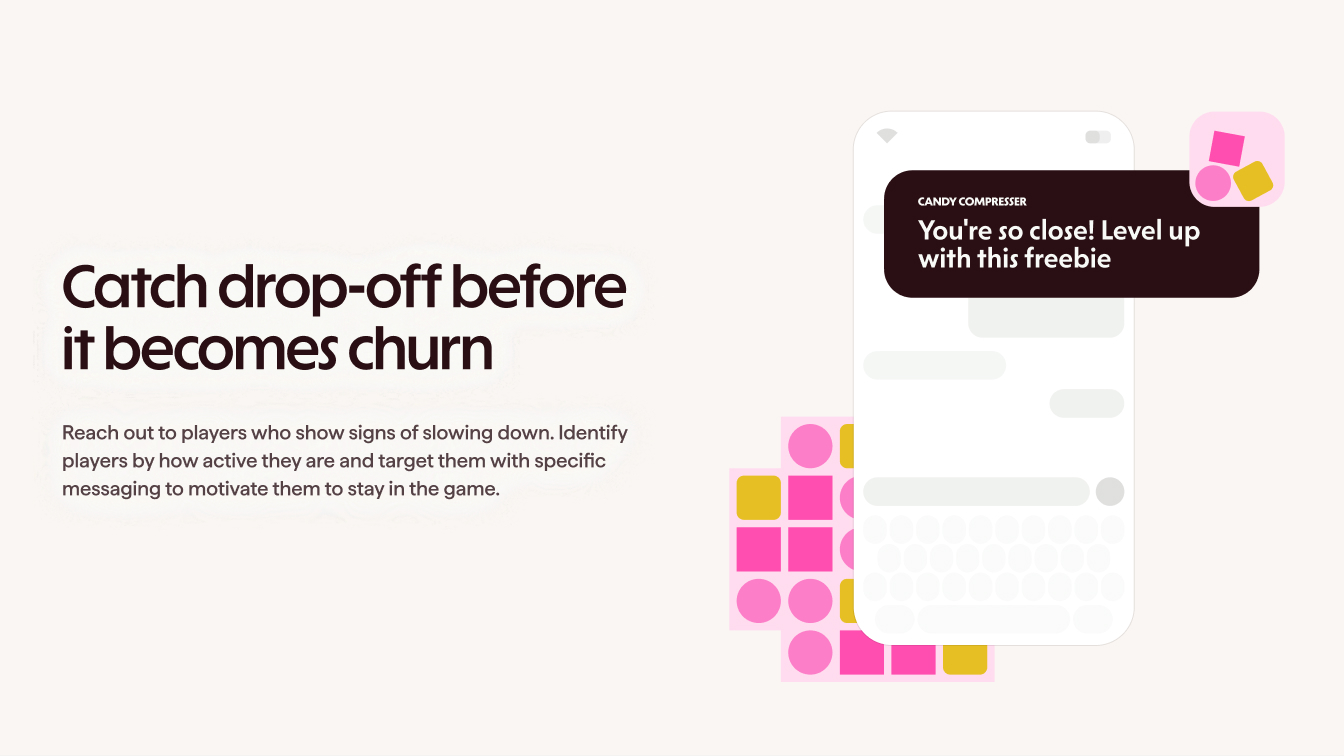
The product is simple to operate, which is what a decade of knowing precisely what to leave out actually looks like: no SQL, no flowchart mazes of overlapping player journeys, a mad-libs audience builder a CRM manager can drive without filing a ticket. Users love it. Buyers scanning a feature grid read "simple" as "can't do much." The data is fast, three to five minutes, quicker than anyone else in the category, which is the difference between catching a lapsing player while they're still half-interested and reaching them a week too late with a gift they no longer need. To someone who didn't know the landscape, fast just sounded like a claim. The team was small, three and a half people, which spooked buyers even though it was the reason every one of them got a founder on the phone.
The proof that the simplicity was depth, not absence, is sitting in a competitor's codebase. One team integrated Teak in five days. After they left for Braze, rebuilding something close to the same rewarded-messaging setup took them thirty months. That's not a feature gap. It's specialization measured in the work you never have to do.
So the job was never winning the feature checklist. It was changing the checklist: stop competing on imagined scale, start competing on the one thing that was true and unmatched, which is that this was built for how games actually run. They're built for conversion funnels. Teak is built for player loops.
The luck was the tell
Teak's customers regularly said they felt lucky to have found it.
That's a lovely thing to hear. It's also a bad sign. Finding the best tool for your exact job should not feel like luck. When it does, it means the finding happened despite the company, not because of it. Teak grew almost entirely on referrals, and the referrals were doing work the brand couldn't. A customer could make the introduction. The founders still had to finish the explanation, on the call, by hand, every time. Word of mouth was carrying the whole story, which holds up right until you want the story to travel somewhere a founder isn't standing.
The product had outgrown the words for it. Closing that gap was the actual job.
Of gaming, not for gamers
It had a trap on either side. One was generic enterprise SaaS: the gradients, the abstract data swooshes, the line about personalized engagement that could belong to a payroll company. The other was gamer cosplay: coins, pixel type, arcade nostalgia, a brand performing for players instead of for the operators who buy. Teak's audience isn't players. It's the people running CRM, retention, monetization, and live ops inside game companies, who know games cold and are evaluating real infrastructure on a Tuesday afternoon.
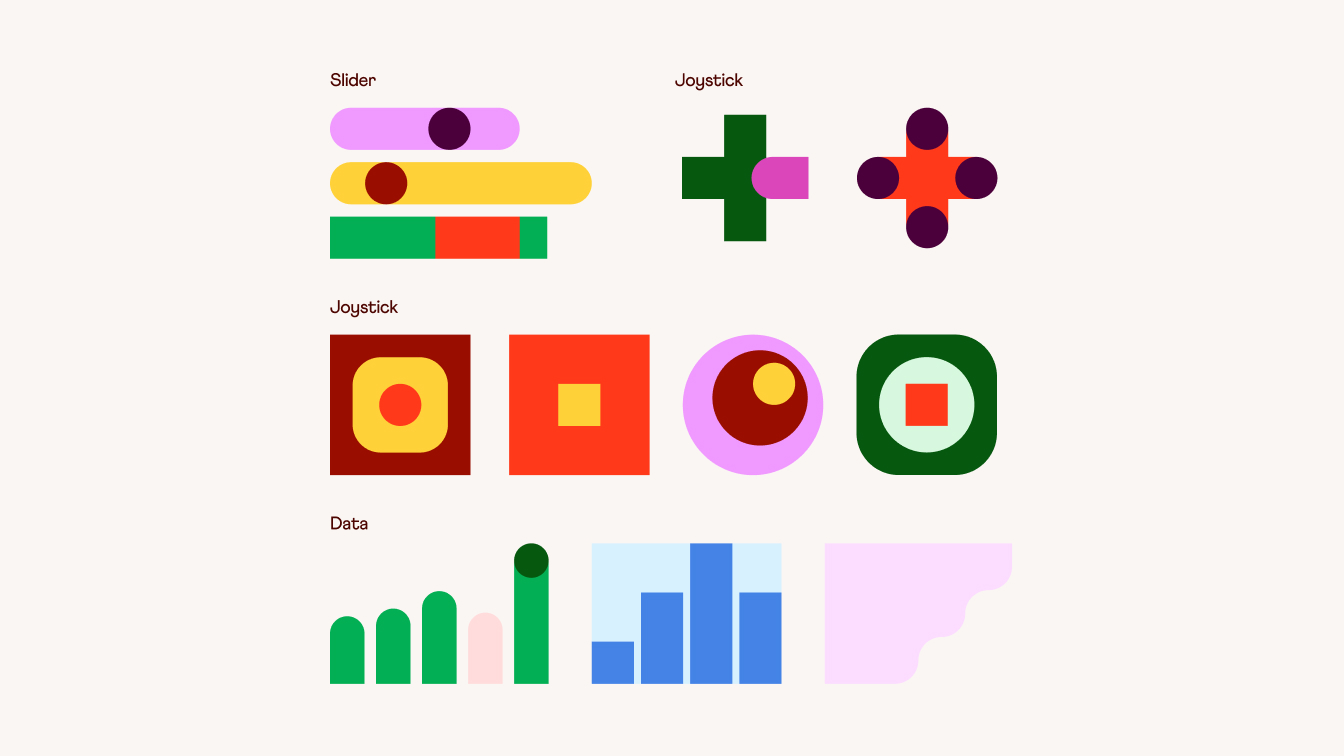
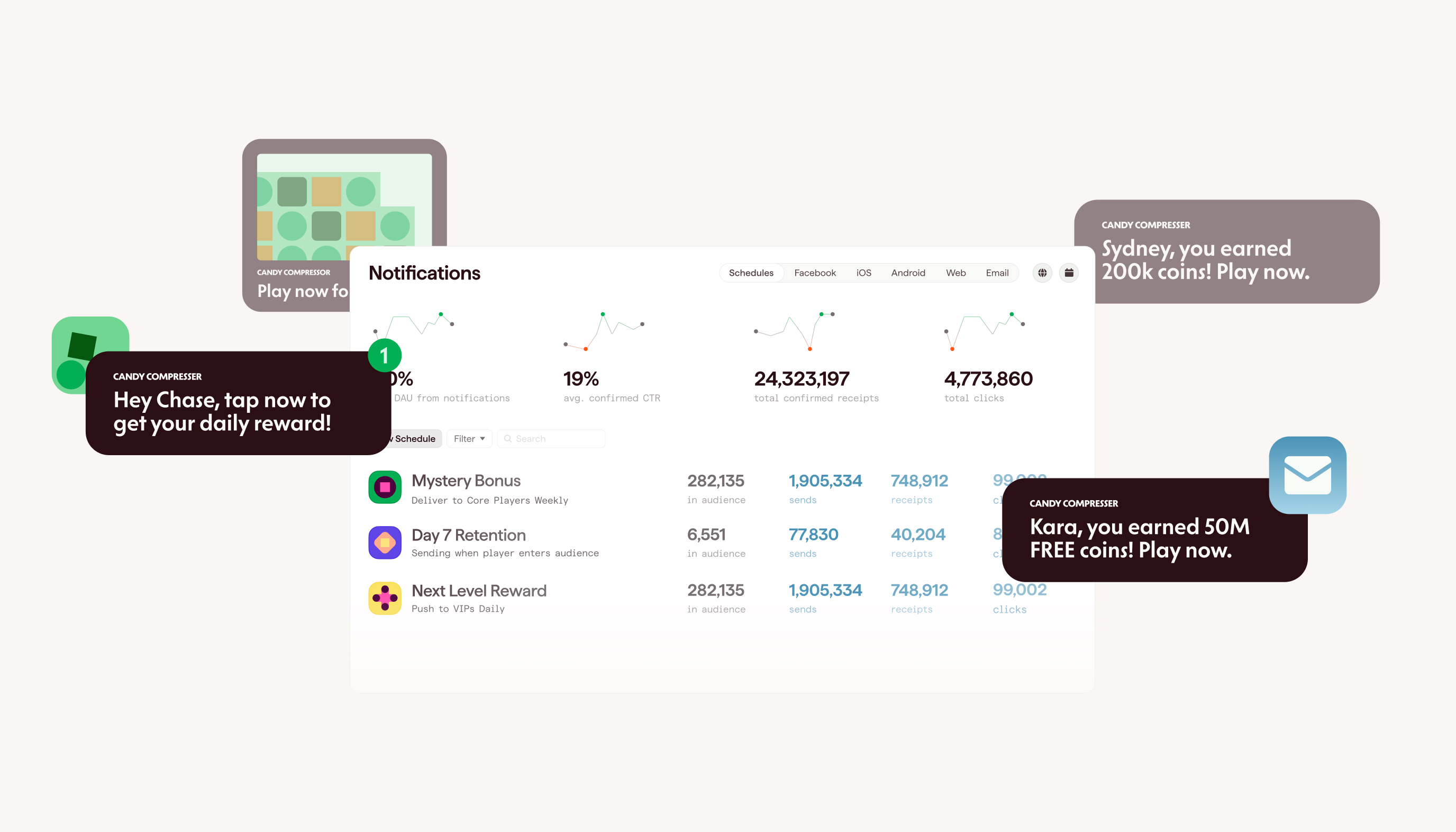
So, with Work is Play, we borrowed the grammar of games without the costume. Bright color, blocks, circles, modular interfaces, state changes, progression, feedback. The energy and logic of a live game with none of its characters. The illustrations turned invisible product ideas, segments, rewards, player states, into things you could see. The copy stayed close to the work, player sessions, lapsed users, high-value incentives, reusable campaigns, fewer dev tickets, and kept failing one test until it passed it: would an experienced operator feel recognized, or marketed at. The understanding was always in the product. The job was to make it visible before a founder joined the call.
The market started seeing what customers already saw
Within two months of launch, Teak's average position in search moved from 31 to 11. That one number carries it better than any adjective about visibility. Position 31 means you technically exist, somewhere behind everyone already being considered. Position 11 means you're in the room, competitive on the high-intent searches that actually convert. Organic search traffic nearly tripled in the same window. Direct traffic rose a quarter, part of a 33% year-over-year lift overall.
No brand project gets to claim every new visit. But the shape of it matched the diagnosis. Once Teak was precise about what it was, who it was for, and why free-to-play retention is a different machine than ecommerce, search systems had an easier time placing it, and more people started arriving on purpose. The trust had started to travel on its own, instead of waiting for a customer to make the introduction and a founder to finish the sentence.
Teak didn't get more specialized during the project. It stopped presenting twelve years of specialization as a pile of features anyone could claim. That prospect never needed an abandoned-cart flow. Teak needed a story that stopped inviting the question.
related articles

AI has a care problem
Your Best Customers Shouldn't Feel Lucky to Have Found You