Nobody claps for the bracket
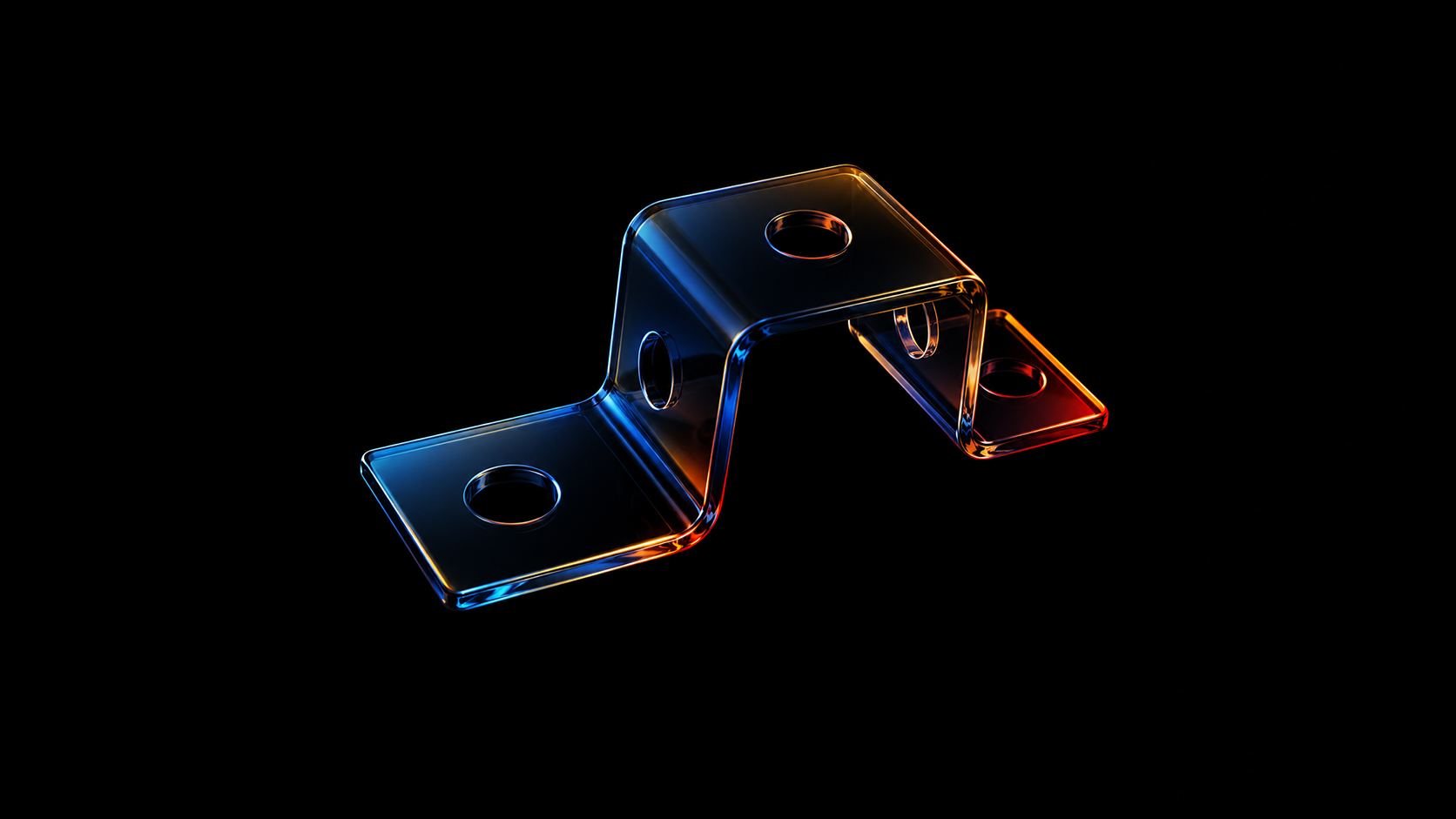
The sound of someone getting punched in a movie is almost never someone getting punched. It's a foley artist in a small room hitting a watermelon, or a raw chicken, or a folded-up leather jacket, watching the fight on a loop until the smack lands on the right frame. Breaking bones are celery. A roaring fire is somebody slowly scrunching a sheet of cellophane. Footsteps in snow are a sock full of cornstarch, squeezed. None of it is the real thing, and all of it sounds more like the real thing than the real thing does. Recorded actual fire sounds thin and disappointing. Cellophane sounds like a fire you'd run from.
You will never think about any of this while you watch the movie. You're not supposed to. If the foley is good, your whole body flinches at the punch and your attention goes straight to the actor's face, which is exactly where the actor would like it to go. The celery did the work. The actor takes the bow. Nobody in the history of cinema has walked out of a theater thinking about the person with the celery.
I keep noticing how much of the world runs on this arrangement. The thing doing the load-bearing work is small, invisible, and getting none of the credit, while the big obvious thing out front collects all of it. And there's a trap inside the trap: the small thing looks like nothing on its own. A man in a booth with a stalk of celery is not a moving experience. Cut to the right frame of film and it's the snap of a bone, and you feel it in your teeth. The part is never the point by itself. The part is the point because of what it's holding up. Sever the two and it's just produce.
Which turns out to be a strange and useful thing to carry into a branding project for a company that makes parts.
The company that makes the bracket
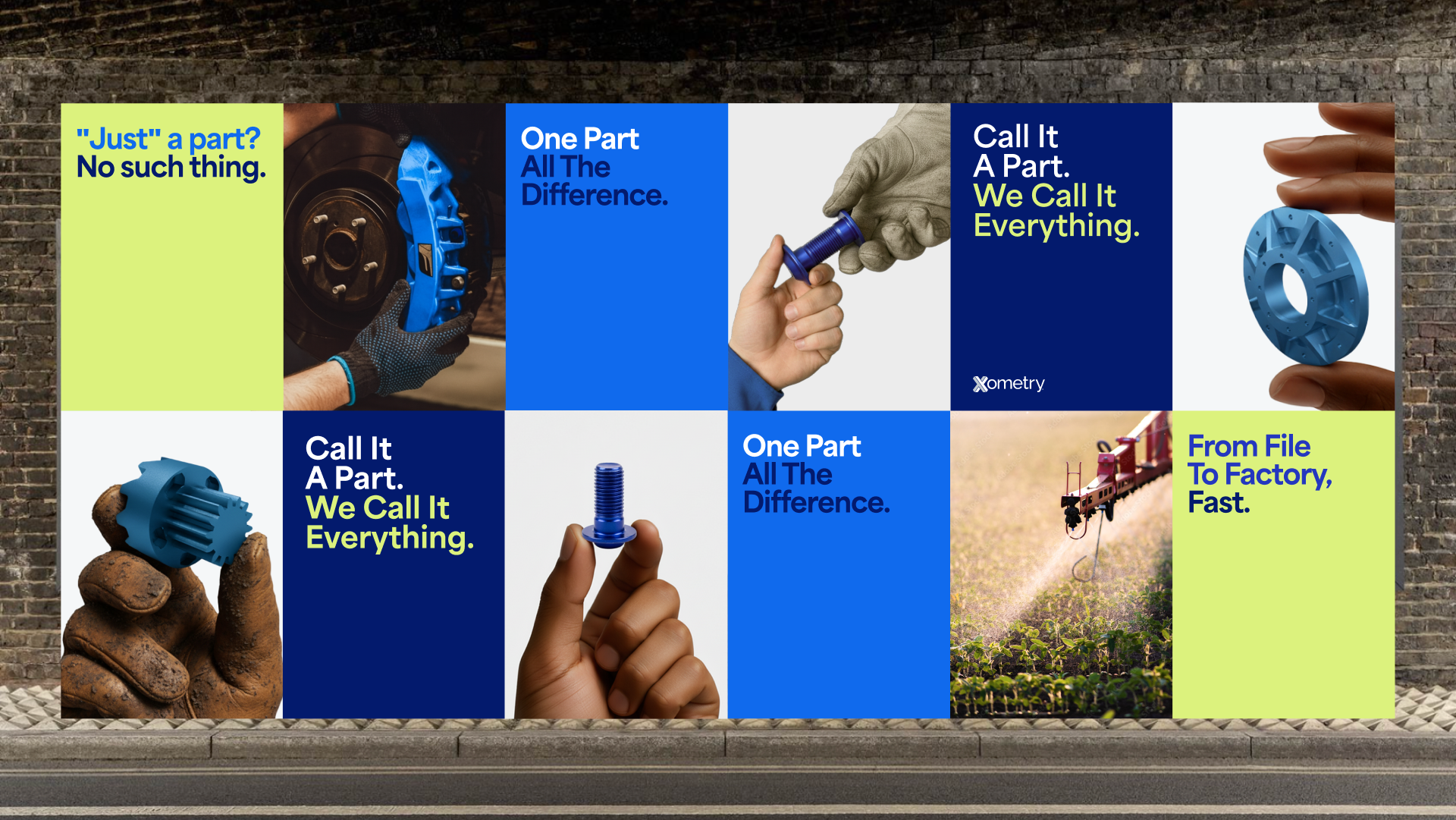
We worked with Xometry, a manufacturing marketplace where an engineer uploads a file, picks a material and a tolerance, and a few days later a real physical part shows up from a supplier they will never meet. Somewhere in the work I learned that some of these parts end up on spacecraft. There is a bracket, machined to a tolerance you need a special tool to even measure, the kind where being off by the width of a hair means it fails, and the thing it was holding fails, and the mission that took years and a fortune does not happen. Somebody's entire career is making sure a piece of metal the size of your thumb is not the reason a rocket stays on the ground. Nobody watching the launch will ever know it was there.
Here was the problem we'd been hired into. Everything the company said about itself was true, and none of it was landing. Fast quotes. Thousands of suppliers. Real tolerances, real quality control, a real team that checks the thing. All accurate, all pitched at the level of the bracket, the part on its own, detached from the rocket it was holding up. Upload a file, get a part. They were describing the celery and wondering why nobody felt the punch.
We tried a few ways into the work before this one. One direction played the boredom straight, the unglamorous honesty of it, parts as parts. Accurate, and it read like a spec sheet with nicer kerning. What actually moved the room was simpler: stop showing the part on its own, start showing the handoff, the part in one person's hand, on its way to becoming someone else's mission. Same bracket. The second a human and a stake appeared on either side of it, the room stopped talking about tolerances and started talking about what the thing was for.
Too close to see it
The people inside the company hadn't been able to see this, and not because they were bad at their jobs. Because they were great at them. You don't make ten thousand brackets and keep gasping at the ten-thousandth. The tolerance that stops an outsider cold is just Tuesday to the person who hits it for a living. Expertise is partly a slow process of losing your own astonishment, a fair trade for getting good, except it quietly takes the story out with it. I was useful mostly because I didn't know enough to be unimpressed. Someone says "bracket, spacecraft" like a line item and I'm the guy going wait, say that again.
Easy to hear all this and conclude the lesson is "tell better stories." It isn't, because that advice is true and useless in the same breath, the kind of thing that sounds like wisdom and gives you nothing to do on Monday. The company didn't need a story invented for it. It had one, sitting in its own plumbing, in a bracket headed for orbit. It needed someone to reconnect the part to the thing it was holding up, and then get out of the way.
What the billboards said back
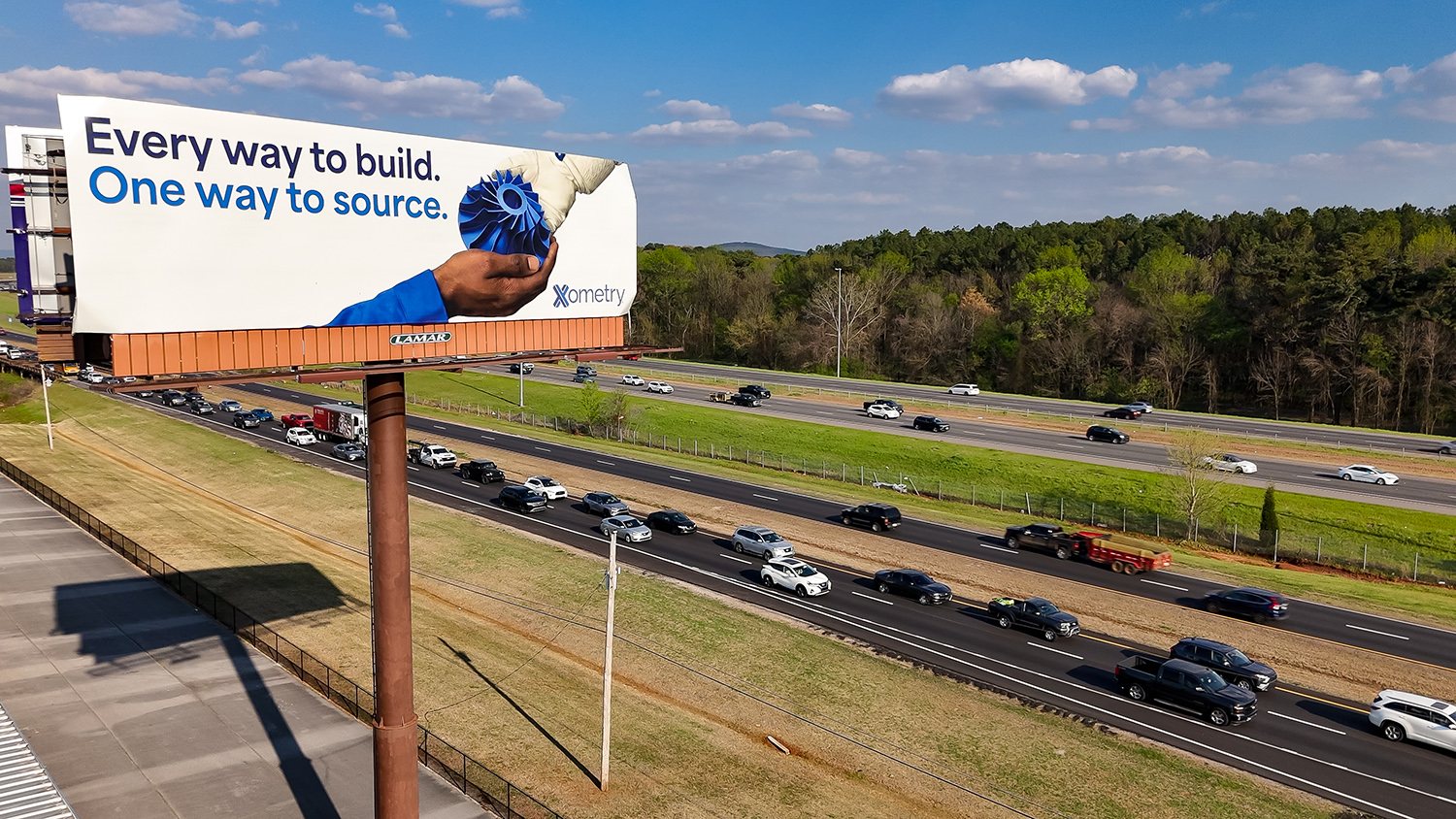
The version that connected the part to the mission beat the version that stayed close to the part itself, and it didn't beat it in a focus group. It beat it on billboards in Huntsville, Alabama, in front of aerospace and defense engineers during a conference week, which is close to the least romantic audience money can buy. People who passed the boards turned out to be 44% more likely to go look up Xometry afterward than people who didn't, a gap wide enough to clear statistical significance, which is not a sentence you often get to write about a billboard. The margin between the two lines was narrower than that, and the placement did some of the work, so I won't pretend the creative test was airtight. But the direction held with exactly the people most allergic to being sold to, which is about as good a verdict as outdoor advertising ever hands you.
The part of the result I like most is the part that rhymes. The heaviest lifting came from three static billboards, a small slice of a buy that ran four times as many flashier digital screens. The plain ones. The cheap ones. The ones nobody builds a campaign around. They carried it.
So now I can't stop seeing it. The bracket under the rocket. The bassline under the song you're actually humming. The celery under the punch that made you flinch. We give our attention to the finished, photogenic whole and almost none to the small thing holding it up, even though the small thing is where the skill and the stakes both live. Plenty of companies describe themselves the same way, leading with the part and forgetting the rocket, because from the inside the part stopped being remarkable years ago. Xometry's platform line is No Small Parts, and once you've sat with the bracket, it stops sounding like a tagline and starts sounding like an instruction.
Next movie, listen for the celery. Next launch, go looking for the bracket. It's in there, doing everything, waiting for nobody to notice.
related articles
AI is the how, not the why
Your Best Customers Shouldn't Feel Lucky to Have Found You